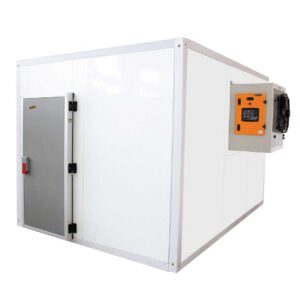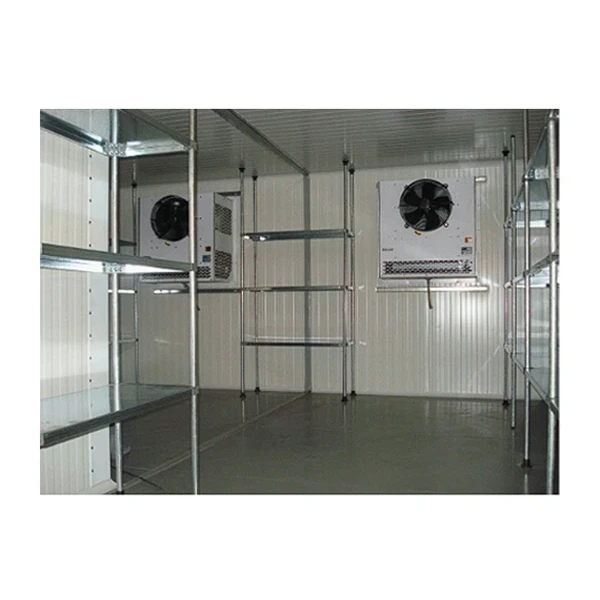
Cold storage shelf

Cold Storage Shelving is one of the essential components in food, pharmaceutical, and industrial warehouses that helps organize and maximize storage space. Choosing the right cold room shelving has a direct impact on productivity, safety, and product lifespan. In this article, we review different types of cold storage shelving, materials, advantages and disadvantages of each, and key points to consider when purchasing.

Category

Share

Description

Types of Cold Storage Shelving

  1. Stainless Steel Cold Storage Shelving
    Advantages: Resistant to moisture and corrosion, withstands very low temperatures, hygienic and suitable for food and pharmaceutical industries.
    Disadvantages: Higher price compared to other models.

  2. Galvanized Cold Storage Shelving
    Advantages: Resistant to rust, more affordable than stainless steel, lighter weight.
    Disadvantages: May be exposed to corrosion over long-term use.

  3. Aluminum Cold Storage Shelving
    Advantages: Lightweight, rust-resistant, easy installation.
    Disadvantages: Lower weight capacity compared to steel.

  4. Polymer (Plastic) Cold Storage Shelving
    Advantages: Completely rustproof, lightweight, suitable for humid environments.
    Disadvantages: Lower load capacity and less impact resistance.

Important Points When Choosing Cold Storage Shelving

Temperature Resistance: Shelving must withstand sub-zero temperatures for industrial cold rooms.
Material Selection: Choose based on product type (food, pharmaceutical, industrial).
Load Capacity: Shelving must support the weight of stored products.
Hygienic Design: For food and pharmaceutical industries, shelving should be seamless and washable.
Cold Room Dimensions and Space: Shelving must be designed according to cold room size.

Cold Storage Shelving Applications

Food Industry: Storage of meat, poultry, fish, dairy products, and vegetables.
Pharmaceutical Industry: Storage of medicines and vaccines in controlled temperatures.
Chemical Industry: Storage of temperature-sensitive chemicals.
Reviews

There are no reviews yet.

Be the first to review “Cold storage shelf”

Your email address will not be published. Required fields are marked *

18 − one =

Types of Cold Storage Shelving

  1. Stainless Steel Cold Storage Shelving
    Advantages: Resistant to moisture and corrosion, withstands very low temperatures, hygienic and suitable for food and pharmaceutical industries.
    Disadvantages: Higher price compared to other models.

  2. Galvanized Cold Storage Shelving
    Advantages: Resistant to rust, more affordable than stainless steel, lighter weight.
    Disadvantages: May be exposed to corrosion over long-term use.

  3. Aluminum Cold Storage Shelving
    Advantages: Lightweight, rust-resistant, easy installation.
    Disadvantages: Lower weight capacity compared to steel.

  4. Polymer (Plastic) Cold Storage Shelving
    Advantages: Completely rustproof, lightweight, suitable for humid environments.
    Disadvantages: Lower load capacity and less impact resistance.

Important Points When Choosing Cold Storage Shelving

Temperature Resistance: Shelving must withstand sub-zero temperatures for industrial cold rooms.
Material Selection: Choose based on product type (food, pharmaceutical, industrial).
Load Capacity: Shelving must support the weight of stored products.
Hygienic Design: For food and pharmaceutical industries, shelving should be seamless and washable.
Cold Room Dimensions and Space: Shelving must be designed according to cold room size.

Cold Storage Shelving Applications

Food Industry: Storage of meat, poultry, fish, dairy products, and vegetables.
Pharmaceutical Industry: Storage of medicines and vaccines in controlled temperatures.
Chemical Industry: Storage of temperature-sensitive chemicals.
Reviews

There are no reviews yet.

Be the first to review “Cold storage shelf”

Your email address will not be published. Required fields are marked *

eleven − 10 =

It's easy as one-two-three

From Assessment to Support